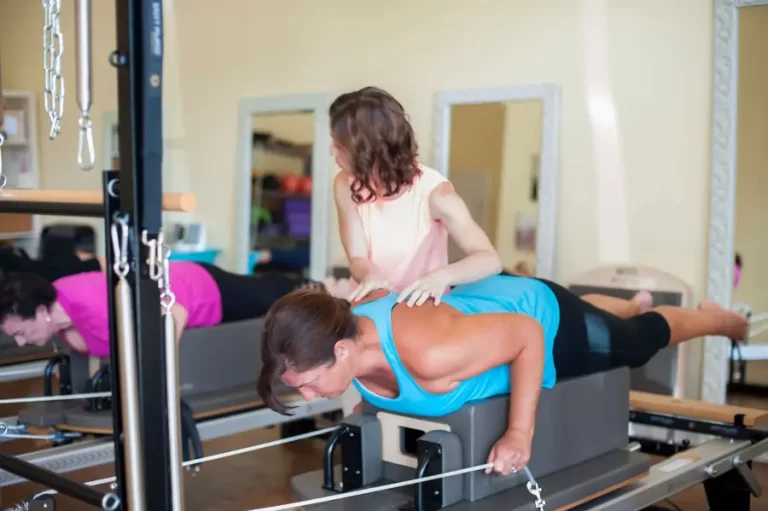
The short answer: Classical Pilates is the original exercise method Joseph Pilates created. The exercises are done in a set order, with control, precision and breath, on the mat and on equipment like the reformer, Cadillac and barrel.
I get asked about this a lot. Usually it’s someone who has tried Pilates somewhere else and noticed that something felt different here. They’re right. So here’s what classical Pilates is, and why I teach it the way I do.
Where classical Pilates comes from
Joseph Pilates was born in Germany. He opened a studio in New York in the 1920s and called his method Contrology. He wanted people to have control over their own bodies.
He built the exercises, and much of the equipment, himself. The exercises follow a particular order, and that order is not random. Each one prepares you for the next.
What “classical” actually means
When I say classical, I mean the exercises and the order stay the way Joseph Pilates taught them. Many studios today change the exercises, add new ones, or mix Pilates with other kinds of workouts. That isn’t wrong. It’s just a different thing, and it isn’t what I teach.
In a classical session you’ll notice a few things:
- The exercises come in a set order.
- The pace is steady and controlled, never rushed.
- Every exercise has a breath that goes with it.
- The work is adjusted to your body, but the method stays the same.
Why breath comes first
Breath is essential to Pilates. Joseph Pilates cared about it as much as the movement itself. Yet in a lot of classes it gets left out, and people end up holding their breath for an hour without knowing it.
When you breathe with the movement, you find a rhythm. You can focus. You start to feel the deeper muscles of your trunk working. It takes practice, so I teach it in the very first session.
The equipment
Each piece does something different, and we use all of them.
- Reformer. A sliding carriage with springs. The springs can support you or challenge you.
- Cadillac and tower. Bars, springs and straps on a tall frame. Great for rehab, mobility and deep strength.
- Barrel. A curved shape that helps you open your chest and move your spine.
- Chair. A small piece that builds balance and strength.
- Mat. Where it all starts.
Who classical Pilates is for
Everyone. I teach people who are rebuilding after an injury, athletes and golfers, people over 55 who want to stay strong, people who sit all day, and people who have never exercised. We adjust the work to your body. The method stays the same.
Why I start everyone with private sessions
Every body is different, and yours has a history. I want to meet it before I ask it to do anything. That’s why new students begin with three private sessions. We talk, I watch you move, and we build a start that fits you. You can read more on the Start Here page, or learn about the method at Spark.
Quick Questions
Is classical Pilates harder than other kinds of Pilates?
Not necessarily. It can be challenging, but I adjust every exercise to your body. The difference is more about the order, the control and the breath than about how hard it is.
Is classical Pilates good for beginners?
Yes, with the right teacher. I start beginners where they are, and new students begin with private sessions so I can get to know their bodies first.
Can I do classical Pilates if I have an injury?
Often, yes. Rehab is how I found Pilates, and I adjust the work to what your body can do today. Check with your doctor or physical therapist first, and I’m glad to work alongside them.
How is classical Pilates different from contemporary Pilates?
Classical keeps the original exercises, their order and the breath. Many contemporary classes change the exercises or mix in other kinds of workouts. Both can be good. They’re just different.